
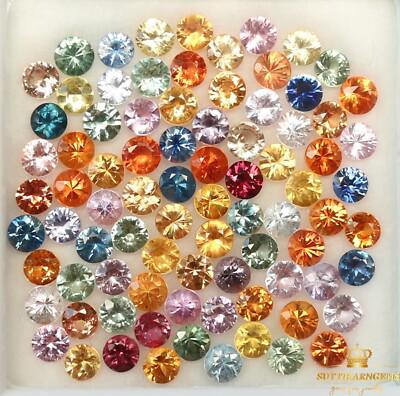
Diamonds may get the spotlight, but gem-quality sapphires are actually far rarer, and in many ways, far more individual. Diamonds are found in large quantities across multiple continents and benefit from a highly standardized grading and cutting system that emphasizes uniformity. Gem-quality sapphires, by contrast, must meet a much narrower set of natural conditions to be considered exceptional: rich, even color; high clarity; and minimal treatment. Most sapphires are heat-treated to improve appearance, and truly fine, minimally treated stones represent only a tiny fraction of what’s mined. Add to that the fact that top sapphires come from very specific, often depleted geographic regions, and their rarity becomes clear.
What truly sets sapphires apart, though, is their individuality. While diamonds are prized for consistency, how closely they match an ideal, sapphires are celebrated for their differences. Each sapphire carries a distinct fingerprint of nature: subtle color zoning, unique inclusions, and hues that range far beyond classic blue into pinks, yellows, greens, and velvety teals. No two are exactly alike. Rather than being one of many near-identical stones, a fine sapphire is a singular expression of time, place, and geology—making it not just rare, but genuinely one of a kind.
R Jester